












Kurdistan - Living behind the veils of Turkish shadow
Since the early 20th century, Kurdish demands for cultural recognition, political autonomy, and linguistic rights have clashed with Turkey’s vision of a unified nation-state. What began as a struggle over identity gradually evolved into cycles of resistance, militarization, and state repression, shaping everyday life in Kurdish regions.

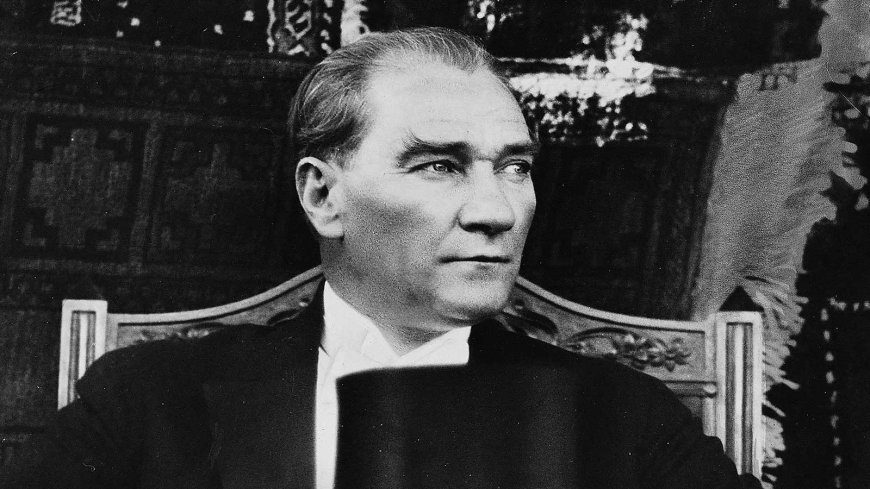
The first period of Turkish Nation state formation lasted from 1920’s until 1945. It was the period of single party rule by Cumhuriyet Halk Partisi who repressed the formation of other political factions and barred them giving any sort oflegitimacy.
The CHP was led by War time hero Mustafa Kemal Pasha who articulated the values and defined the barometer of the progress of the nation in his six principals of Republicanism, Nationalism, populism, etatism, secularism,and reformism. Until the year 1950, When CHP rule came to an end, the era was characterised by an iron fist rule by an authoritarian leader Kemal Ataturk. Minorities felt alienated and their rights infringed which led to many uprisals against the Kemalist policies during the turbulent period of 1920’s - 30’s.
Turkey’s move toward secularism began in the 19th century, during the late Ottoman Empire, especially with the Tanzimat reforms (1839–1876). These reforms introduced secular legal codes, modern education, bureaucratic reforms, and equality of subjects regardless of religion, which reduced the dominance of Islamic law in state affairs. Turkey became formally and constitutionally secular only after the founding of the Republic in 1923, under Mustafa Kemal Atatürk.

The aim of Kemalist reforms were based on the separation of religion and the state. This strenuous task was taken up through the destabilisation of the religious institutions in the country. The functioning of religious institutions such as tombs and shrines was curtailed and were barred from issuing any mystical or religious orders. Also, the enforcement on using Turkish and the curtailment of using Kurdish language was prohibited by law.
The sour relationship between the Turks and the Kurds dates back since the formation of the republic of Turkey. Some state officials even deny to accept Kurds as a separate ethnic group- and asserts that they are actually “mountain Turks”, and hence profusely prohibit the use of Kurdish language in the public and official space.
Going through the history of Kurds it has been found that they have existed for more than 2000 years. Their total population stands at about 20-25 million and according to the population census more than half of them are said to live in Turkey. Their population has found space in different countries of the world like Iraq, war torn Syria, Iran and Turkey. They are both linguistically and religiously diverse ethnic group and their faiths count from being the adherents of Zoroastrianism, Judaism, Christianity and Islam. There are different dialects which are spoken by the Kurds such as Kurmanji, Surani, Zaza, Kirmanshahi, Gurani and Leki. Kurmanji is spoken by the people living in the Northern part of Turkey while Surani is the major language of the South Turkey and for the Kurds living in Iraq.

The struggle for Kurds to assert their identity was aggravated after the 1st world war. The Turkish government prepared for them a plan to move them out of the East and settle them in the Western Anatolia region. The plan was deliberately carried out with the motive that the Kurdish population should not exceed more than 5 percent of the total. Even though plan was partially implemented by the Ottoman government, it was put in place several time which resulted in forced migration, military violence, and banned the use Kurdish language even in the private life.
With the victory of the Allies in the first world war, Turkey was forced to sign the treaty of Sevres on Oct. 20, 1920. The treaty was quite a harsh rebuke on the Ottoman government. Though it was allowed to function but its Anatolia region was divided between France and the Britain. The Allies also made a point in the favour of Armenia to be founded on the Eastern Anatolia and Kurds to have an autonomous region of their own. This led to a war as the Turkish nationalists carried on for four years from 1919 to 1923 against the invading forces to save Turkey from being dissected. Ultimately with the victory of the Turkish Nationalists the treaty of Sevres was overturned with a more manageable treaty of Lausanne where granting an autonomous region to the Kurds was solely absent. Interesting point is that the Kurds fought alongside with the Ottomon Turks against foreign occupation even then the Kurds were not given any preference in the Lausanne treaty while safeguarding and promoting the non- Muslims in their choice of religion, school and language.

After the war ended, now the Kurdish population had to taste the onslaught of the Turkish government who now modified the Kurdish names of places and streets with the Turkish ones. The new constitution adopted in October 1924 now defined Turkish as the official language.
With lack of opportunities for the Kurdish people for their education they were now evenly repressed from all ends. This led to the surge in the Kurds armed uprisings against the government. The settlement law of 1934 was made to draw lines and particularly mark its geography into three different zones. The first zone was marked by the people who are Turks and who are already living there. The 2nd zone included that region where there was ample chance that the inhabitants could be assimilated into the Turkish culture. The most controversial of them was the third division of the region where the inhabitants of the villages were to be displaced to the Turkish speaking region and the orders of complete evacuation of the region was passed.

With the advent of Kurdish nationalism rose the Islamist who with the support of Kurdistan workers party under the leadership of Abdullah Ocalan went on a one on one war with the Turkish military and the country was dragged into a yet another civil war that lasted until 1999. According to estimates about 30,000 to 40,000 people lost their lives in the bloody ethnic warfare. The Shia Islamist group also found their opportunity to sneak in during this period. The Hizbullah Kurdish revolutionary party raced up its notorious activities in the South East. However, the group was well aligned to dispose off the PKK and hence the state allowed it to function as it was giving them dual benefits fighting the PKK insurgents and at the same time manging to target intellectuals and authors who held a pro PKK stance.
The Turkish parliament also established a law in 1961 where the Kurdish children were compelled to study and learn the Turkish language. This obviously led to the Kurdish students unable to understand and according to a Kurdish American lawyer Matin Serbest, who was at that time taught in a Turkish school, states that he was reprimanded, threatened and even beaten on using even those words which were common to both the Turkish and the Kurdish language. All this agitated the tribal chiefs from the Kurdish populated areas of Dersim and they sent a letter to the secretary general of the League of Nations describing the atrocities carried on by the Turkish government. This failed to bring any assistance to the Kurds. The last uprising in and around Dersim was brutally clobbered down with such an iron fist that no further organised movements appeared until the 1960’s.

Turkey’s stance on the granting of the linguistic and cultural rights to the Kurds has never been in its favour because the roots of the Turkish state is based on the Kemalist ideology of the lineage of Turks and its vehement refusal to bring under its garb other ethnic minorities. Giving them their cultural and linguistic rights is described as an attempt to creating the notion of minority and labelled as a threat to the existence of the Turkish state. The whole concept of bringing up the rights of the Kurds is due to the fact that individuals who are part of the minority have minimum opportunities as compared to the rest of the majority who enjoys vast economic and social progress through educational opportunities, growth in jobs and other incentives which are unavailable to the minority.
What's Your Reaction?