




















Spain train collision - Investigators finds new evidences
A deadly rail collision near Adamuz in southern Spain killed 45 people after a high-speed train derailed and hit another train. Investigators believe the crash may have been caused by a fractured rail that failed shortly before the train passed over it.

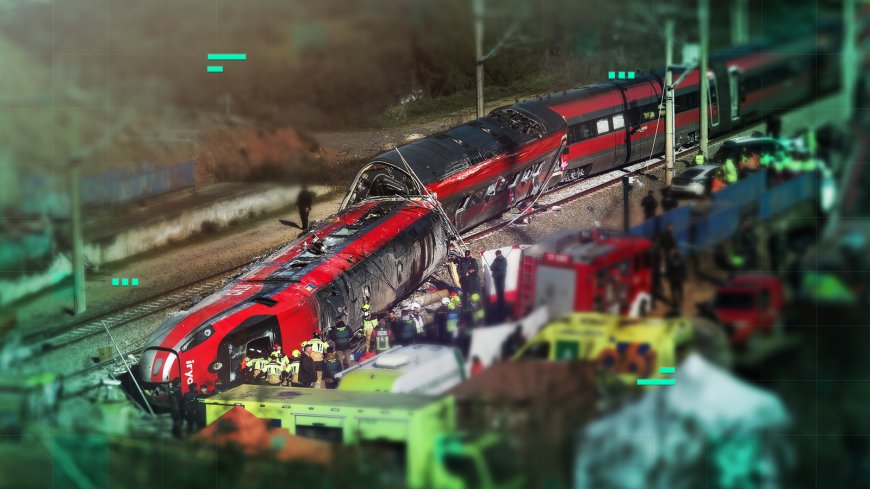
Experts investigating the fatal rail collision in southern Spain, which claimed 45 lives and injured dozens more, believe the crash may have been triggered after one of the trains passed over a damaged section of track.
The accident occurred on Sunday near the Andalusian town of Adamuz, when a high-speed train operated by the private company Iryo derailed and collided with an oncoming high-speed train run by the state-owned operator Renfe.
A preliminary report released on Friday by the Rail Accidents Investigation Commission (CIAF) revealed damage to the wheels on the right-hand side of the three leading carriages of the Iryo train. Investigators said the marks were consistent with an impact against the top of a fractured rail.

According to the report, the damage to both the wheels and the rail suggests that the track had broken, interrupting its continuity. The section of rail before the fracture would have borne the full weight of the wheel, causing it to sag slightly, while the section beyond the break would not have moved in coordination. This mismatch would have created a temporary step between the two sections, striking the wheel rim as the train passed.
Based on the evidence available so far, investigators said it was reasonable to hypothesise that the rail fracture occurred before the Iryo train passed over it and therefore prior to the derailment. However, the CIAF stressed that this conclusion remains provisional and will be subject to further testing and analysis.
Spain’s transport minister, Óscar Puente, said on Friday that if a damaged rail was responsible, the fault must have developed in the minutes or hours immediately before the derailment and therefore could not have been detected in advance. He added that investigators were also examining whether the rail may have suffered from a manufacturing defect.
Pedro Marco de la Peña, president of Spain’s state rail infrastructure administrator Adif, confirmed that the batch of track involved had been identified and would undergo detailed testing.
The Adamuz disaster was followed just two days later by another fatal incident, in which a train driver was killed and 37 people were injured after a retaining wall collapsed onto a railway line near Gelida in Catalonia, causing a derailment.
In response to the two deadly accidents, Semaf, Spain’s largest train drivers’ union, has called for a three-day strike in February, demanding stronger measures to ensure the safety of rail workers and passengers. The union said industrial action was “the only legal avenue left” to restore safety standards across the railway system and protect both professionals and the travelling public.
What's Your Reaction?