











Korea marks Int’l Women’s Day with gender equality rally
Korean Women’s Association United hosted the 41st Korean Women’s Rally in central Seoul on Saturday, turning the Gwanghwamun area into a purple-hued sea of celebration and protest ahead of International Women's Day on Sunday.

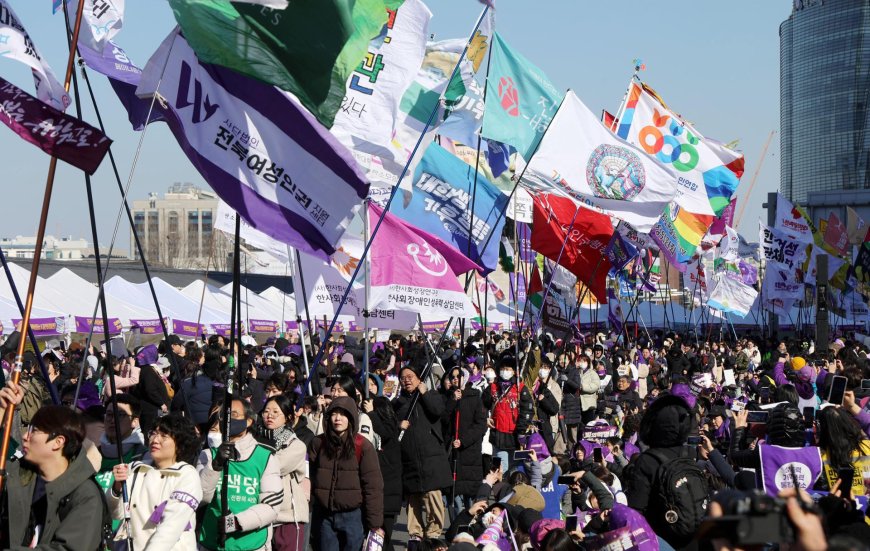
Korean Women’s Association hosted the 41st Korean Women’s Rally in central Seoul on Saturday, turning the Gwanghwamun area into a purple-hued sea of celebration and protest ahead of International Women's Day on Sunday. This year’s Women’s Movement of the Year award symbolically went to all women who advocated for gender-equal democracy during the rallies calling for the impeachment of former President Yoon Suk Yeol, with organizers rolling out a red carpet for participants to pose with bouquets and mock trophies.
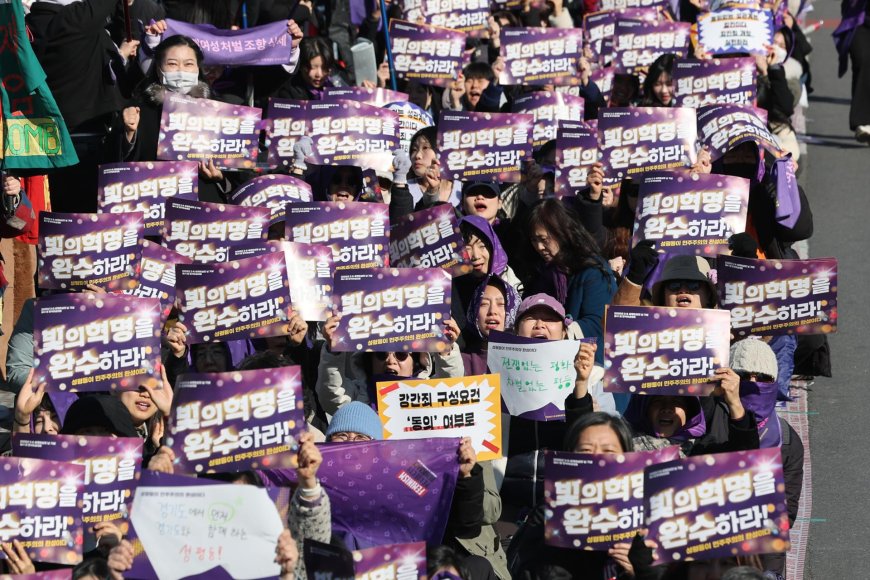 Participants hold banners reading "Complete the revolution of light" during a gender equality rally in central Seoul, Saturday, the day before International Women’s Day. Yonhap
Women of all ages attended in the event’s dress code of purple, long been used globally as a suffragette color symbolizing justice and dignity. It also became the trademark hue of Korea’s feminist movement in recent years, from annual women’s marches to #MeToo protests.
Participants chanted, “Complete the revolution of light!” and “Gender equality is the completion of democracy!” The first referred to the main slogan of the impeachment rallies, which also featured calls for antidiscrimination and equal rights, while the latter reflected the backlash against the Yoon Suk Yeol administration, which had moved to abolish the gender ministry and scale back gender equality policies.
More than 50 booths were set up by civic groups, including Korea Women’s Hot-Line, Korea Sexual Violence Relief Center and Rainbow Action Against Sexual-Minority Discrimination, offering counseling, petitions and campaign materials.
Reading out the March 8 Women’s Declaration, participants urged the National Assembly to enact a comprehensive antidiscrimination law, guarantee dignity and rights for gender violence survivors, secure real equality in labor and reproductive rights, and push for constitutional revision and greater political representation for women.
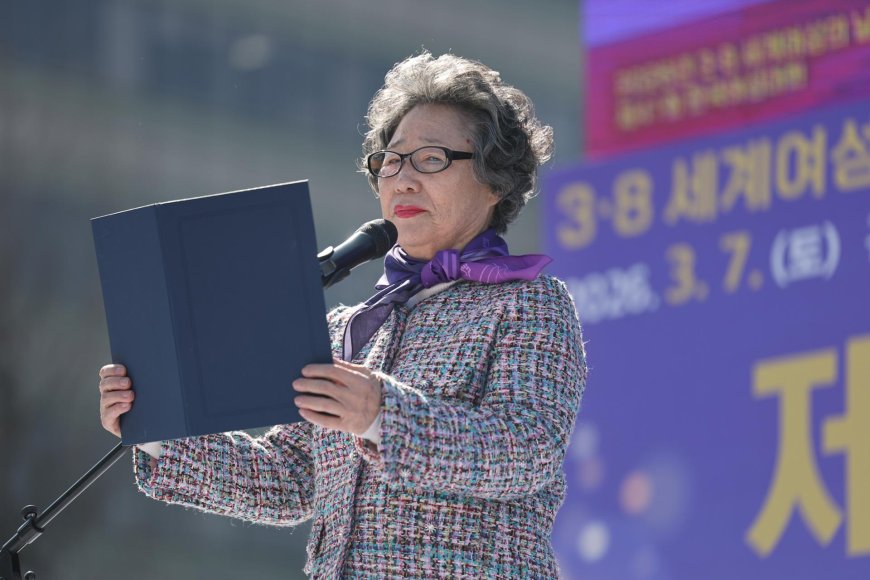 Gender Equality and Family Minister Won Min-kyoung linked the women’s movement to Korea’s democratic future. Yonhap
Choi Mal-ja delivers a congratulatory address at the 41st Korean Women’s Rally in Seoul, Saturday. She said, “Without the realization of gender equality, it is difficult to expect the completion of democracy,” she said in a congratulatory speech. “The ministry will always move forward together toward substantive gender equality.”
Despite rising employment rates for women, Korea still ranks near the bottom among advanced economies on many gender equality metrics.
According to OECD data, Korea has the widest gender pay gap among member states, with women earning around 70 percent of men’s wages on average. The Economist’s latest glass-ceiling index, which tracks how easy it is for women to advance at work, ranked Korea last among 29 OECD countries for the 12th consecutive year. Other data shows Korean women are overrepresented in low-wage jobs and underrepresented in management.
What's Your Reaction?