










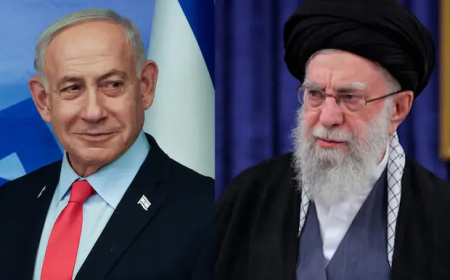






Iran war enters into a new phase as Houthi's strikes Israel
With Iran’s near total closure of the strait of Hormuz, a shutdown of the Bab al-Mandab, located between Yemen and the Horn of Africa, would amplify the already grave impact of the war on the global economy.

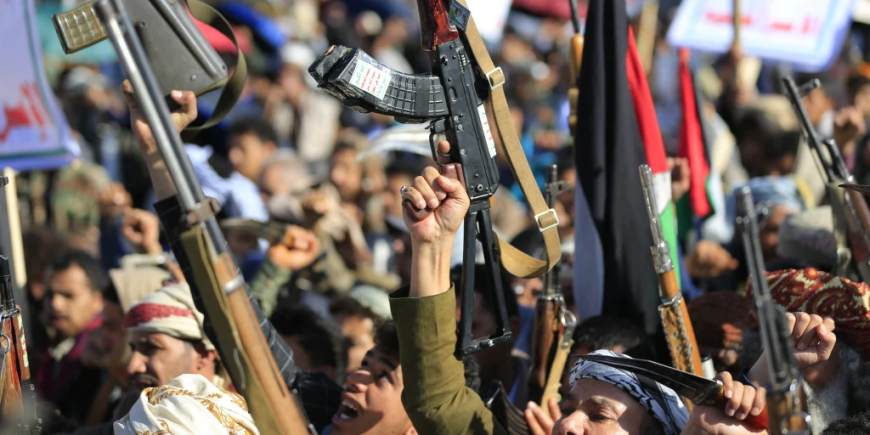
The US-Israeli war with Iran has expanded with the entry of Houthi forces in Yemen, representing a dangerous spread of the conflict and bringing with it the threat of more damage to the global economy.
Pakistan has said it would host a meeting of Middle Eastern powers on Monday in an effort to find a regional approach to ending the conflict. But the talks, which bring together the foreign ministers of Saudi Arabia, Turkey and Egypt, did not appear to include any of the warring parties, casting further doubt on persistent US claims of diplomatic progress.
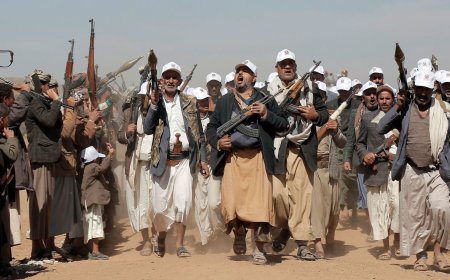
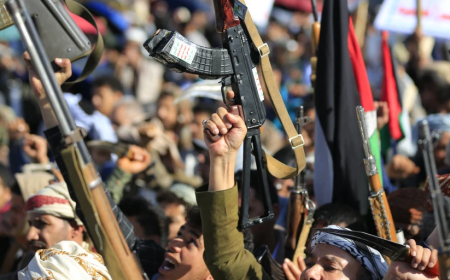
Houthi forces, close allies of Iran, said on Saturday they had fired a salvo of ballistic missiles at “sensitive Israeli military sites” and that they would continue military operations until the “aggression” came to an end on all fronts. Israel said it had intercepted one missile originating in Yemen.
Despite US claims to have devastated Iran’s military, Reuters cited intelligence sources as saying Washington could only be certain it had destroyed a third of Iran’s missile and drone arsenal.
US media reported that a missile and drone attack on Prince Sultan airbase in Saudi Arabia wounded at least 12 US soldiers, two of them seriously. Drones also struck Kuwait international airport on Saturday, causing significant damage to its radar system.
With Iran’s near total closure of the strait of Hormuz, a shutdown of the Bab al-Mandab, located between Yemen and the Horn of Africa, would amplify the already grave impact of the war on the global economy, and could also reignite a Saudi-Yemen conflict that caused huge humanitarian suffering for seven years before a 2022 truce.
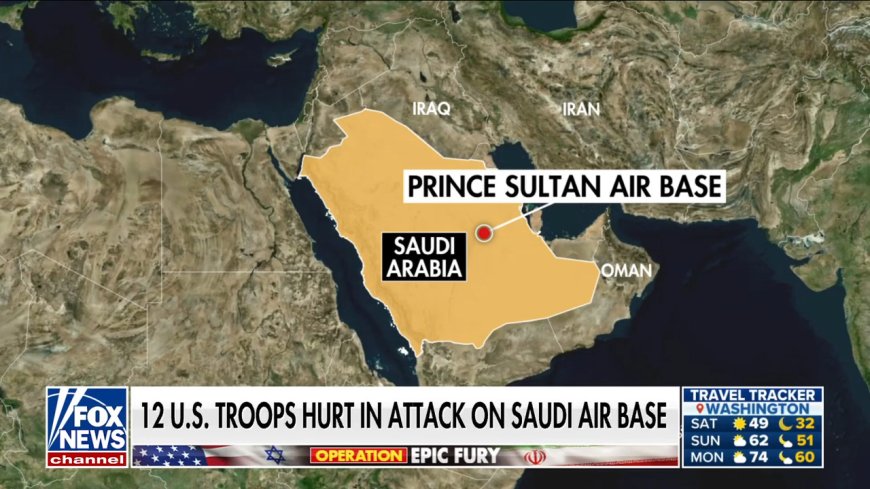 Image credit - Fox News
Since the US-Israeli attack on Iran on 28 February, Saudi Arabia has been able to divert some of its oil exports by pipeline to the Red Sea. Saudi commentators have said that if this route was also threatened, Riyadh could also enter the war directly.
Farea Al-Muslimi, a research fellow in Middle East and north Africa programme at the Chatham House thinktank, said: “The decision by the Houthis to join the broader Middle East conflict marks a serious and deeply concerning escalation.
“The potential impact on key commercial maritime routes, especially in the Red Sea and the Bab al-Mandab strait, cannot be overstated. At the same time, vital economic and military infrastructure across the Gulf region may become increasingly exposed.”
The survival of the Islamic Republic’s regime after a month of bombing has left Trump with the choice of looking for a way to extricate the US from the costly war or intensifying the campaign, possibly including ground troops. Thousands of US marines and airborne forces have been deployed in the region in recent days, raising speculation of a land incursion on Kharg Island, Iran’s main oil export hub, or on islands in the Hormuz strait.
Tehran has warned that, if that happened, it would completely shut down the strait and escalate its attacks on regional infrastructure, including desalination plants essential for the water supply in several Gulf countries.
Such an escalation, possibly combined with renewed direct confrontation between Saudi Arabia and the Houthis, could lead to a major regional conflagration, Al-Muslimi said.
“Any such war would likely be more intense, more destructive, and even more devastating than previous rounds of fighting.”
What's Your Reaction?